
David Dalle
Thursday December 18th, 2025 with David Dalle
My annual winter solstice journey from darkness to light, this year with Boulez's Mahler.
During the darkest time of the year, humanity has always cried out from the darkness, in hope, in joy, in the celebration of family, friends and community. Music is central to this and we take a journey from darkness to light through music. This year, it will be a long dark night with Mahler's 6th symphony.
This symphony is virtually unique in the symphonic repertoire and unique among Mahler's symphonies to end in a completely bleak and negative manner. All the more shocking because the symphony overall is more conventional for Mahler than usual, e.g. purely instrumental with a traditional four movements. Though only relatively more conventional, as it does use an enormous expanded orchestra, stretches tonality and is full of extreme and disturbing tensions. The 6th overturns a century of the symphony, modeled after Beethoven's 3rd, 5th, and 9th symphonies. Beethoven's model--enormous struggle, despair, violence with moments of ravishing beauty and peace finally giving way to victory and redemption, had became the standard 19th century symphonic convention and epitomized in the symphonies of Bruckner as well as several of Mahler's other works like his 1st, 2nd, and 5th symphonies.
From the opening grim and resolute march to the massive final movement--which I find is truly the musical apotheosis of struggle--it seems to be following this convention but on an incomprehensible and extreme scale, almost the sister symphony to Bruckner's 8th. The finale builds to incredible heights then it is painfully halted, the symphony sounds like it is dying, groping around in darkness and slowly starting to lift itself up, it stubbornly recovers and builds to an even greater climax, surging ahead to a moment of great beauty--the promised land finally reached! All listeners in 1905 (and still most today) are expecting this redemption, but the music is violently halted again, once again it is lost in the darkness, once again it slowly starts to pick itself up, it can rebuild, it will rebuild, this is what symphonies from the previous 100 years do. However, it is suddenly, brutally ended with a shocking fortissimo minor chord, a gunshot to the back of the head.
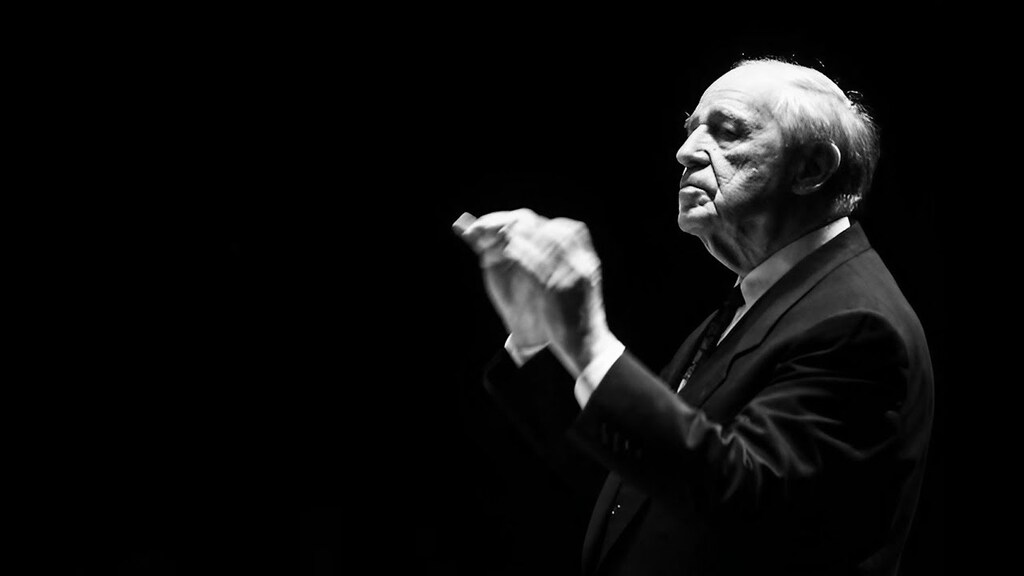
I was first introduced to this work with the 1994 recording by Pierre Boulez with the Vienna Philharmonic, his first recording in his Mahler cycle. It has always been one of my favourites, but with the "Boulez the Conductor" box set which came out at the beginning of the year, it included a second recording of the 6th, a live recording from 2008 with the Staatskapelle Berlin, which I find even better.
| Symphony No. 6 Gustav Mahler/Staatskapelle Berlin, Pierre Boulez - Boulez the Conductor vol. 43 - Deutsche Grammophon |
| The light will burst through! |
| Jesu Oa Re Lwela Sotho Gospel - The Spirit of African Gospel - ARC |
| Emmanuele Abel Selaocoe - Hymns of Bantu - Warner Classics |
| Zelesegna Mulatu Astatke - Mulatu Plays Mulatu - Strut |
| Dansesko Flammer Dance Band - Dedikasjon Til Inspirasjon - Lyskestrekk Records |
| Dinaka Abel Selaocoe - Hymns of Bantu - Warner Classics |
| Fun tashlikh Klezmatics - Rhythm + Jews Revisited - Piranha |
| Gypsy Mambo No. 555 Fanfare Ciocarlia - It wasn't hard to love you - Asphalt Tango |
 Subscribe to David Dalle
Haven,t been able to hear it all, but large sequences, anyway. And man, not even CBC puts on the waves pieces of such length! Supernice...
3:10 PM, December 18th, 2025